Live tweets from Day 199 of the Post Office Horizon IT Inquiry.
211 tweets
Good morning and welcome to the penultimate day of the Post Office Horizon IT Inquiry. Sir Wyn Williams is in the Chair. He begins by recording the death of Mrs Margaret Boston – a former Subpostmaster in Brex in Rotherham in South Yorkshire. She died on 2 November. She was a core participant in the Inquiry.

She once spoke up at an NFSP meeting to say that SPMs should stop using the Horizon system until its faults were sorted. Mrs Boston was one of the 555 and had received full and final compensation via the GLO scheme before she died.
I am sitting in a very busy hearing room – almost as full as it was for Paula Vennells. Very many Subpostmasters here and a good number of hacks. I'm going to live-tweet proceedings. Please remember…
… everything I tweet is a incomplete summary of what is happening or paraphrases what is being said. Nothing is a direct quote unless it is in "direct quotes".
I will try to put everything into a blog post at the end of today. I would also like to let you know my new book on the Post Office which will be out after the Inquiry reports next year:
x.com/nickwallis/status/1868543680187072760
Jason Beer KC is conducting proceedings. Confirms these two days are scheduled to be the final hearing days of the Inquiry, but also notes that more documents may be uploaded to the Inquiry website, shared with core participants and/or read into the record without a hearing.
Beer is currently reading more witness statements into the record. You can watch today's proceedings here:
www.youtube.com/watch?v=6g2-jxcZI6s
JB: 270,785 docs disclosed by inquiry to CPs (core participants). Page count of those docs is 2,213,858. 780 witness statements… most significant figure is number of SPMs to have died waiting for compensation – many have been CPs.
JB – I hope we have not lost sight of the fact this is about people, not a dodgy IT system.
SWW – we have allocated an hour to all but one advocates. I will be reasonably strict about this. There is a vast amount of written subs which I have been trying to digest this last week.
SWW – I will read them more than once. I hope the advocates will summarise their main points and attack those of which they disapprove.
Ed Henry KC (EH) goes first – the greatest horrors of the world are those who commit wrongs whilst saying they are doing good.
EH – the PO committed this awful wrong. [Quotes Voltaire about believing absurdities and committing atrocities.] The PO said the Horizon IT system (H) was infallible and all mistakes were the SPM's fault. They were told they were the only ones. |Such heartlessness came from the top"
The PO saw H as the ultimate spy at the counter. H was a false god. The atrocities which followed were the inevitable consequent of that. The PO board ought to have known that by refusing to countenance H errors they had created a terrible risk.
They realised they had a choice, but they closed ranks. Paula Vennells (PV) piously agreed with her predecessor that it was all subbies with their hands in the till. In 2014 PV told her colleagues she was more bored than outraged by the SPMs complaints.
Corporate psychopathy enforced with deceit and reflects badly on our society. you (SWW) know your own mind, but you have asked this question more than once – is the Po worth saving? Well has the leopard changed its spots? What is the test? Compensation.
Unfortunately the conduct of comp. tells you that the leopard has not changed its spots. It continues to poison the process. The PO's dirty tricks still continue. It is not what it says, but what it does. It wanted 5 expert witness reports for Janet Skinner. It rejected a claim..
from Gowri Jayakanthan on a technicality. It put in place barriers and tried to "thin the heard" – a nice, dehumanising phrase. It's been shredding documents. The PO will put up any obstacle to delay proper restitution. And it crafted this process not long after the 2019
… Common Issues judgment. It continues to manipulate cynically. Mr Underwood (PO lawyer) typifies the mindset of manipulation. Compensation is pettigfogging, legalistic and slow. Many claimants surrender before it is complete. People have died and will die before they get…
… compensation. Many will take the case, not because it's fair or full but because they are exhausted. Remember the clawback ploy the PO tried which Lord Dyson roundly rejected. A symbol of its monstrous entitlement.
This is behaviour which echoes Lord Coulson called the PO's assumption it can treat its SPMs like a mid-Victorian factory owner.
This is Ed Henry with former SPMs, Parmod Kalia and Chris Head behind him with Davinder Misra. Seema Misra's husband also visible. On EH's right is his junior Flora Page.
The PO racks up millions in legal fees from public funds. It's a shameful spectacle. It's a pitiless brutal process. Nothing has changed. 5 years have passed since Mr Justice Fraser said The PO appears to conduct itself as though it were only answerable to itself.
This is a very good point. 5 years ago today the Horizon Issues judgment was handed down. I was there for that, too. Here's a report.
www.postofficetrial.com/2020/01/horizon-trial-judgment-is-handed-down.html

Here's a better one, published the next day:
"They did it"
www.postofficetrial.com/2019/12/they-did-it.html

EH talking about the PO's behaviour during the inquiry – victimising the "public interest" cases (of which Parmod, Varchas Patel and Teju Adedayo were three) and claiming they could have no compensation – victimising Mrs Addedayo under the cloak of qualified privilege.
Is the PO worth saving? Only when it is safe. And it will only be safe when it has grasped an understanding of its own history and changed. And paid compensation. and it has failed on both counts. enough, we say of commissioning reports which do nothing.
Give the victims their money – they are more deserving of the millions which is being paid to the lawyers who are fighting them. We represent a small number of victims who have suffered egregiously. They know you will unimpeachable findings of fact. We also focus on compensation
I come now to the paradigm cases of Lee Castleton and Seema Misra. Both were regarded as test cases by the PO. With LC – the PO should have said we perverted the civil justice system for a collateral purpose. We needed a judgment which made no commercial sense and we had to…
… destroy you to do that. We adopted the case on a false basis. We used false evidence. We reversed the burden of proof. With Seema Misra (SM) we needed another test case, we had civil lawyers breathing down our necks so we needed to stand on yours. Gareth Jenkins knew all about remote access, but he hid that from you.
Your conviction was the so-called shining proof of H's integrity and when we found out that Gareth Jenkins had lied, we could not let you know. We could not tell you. The case of SM is a microcosm of the wickedness of the PO's prosecutions spree and the cover-up is a worse level of wickedness because it involved the CEO and many other. A deplorable strategy of suppression. Containment was a concerted and coordinated policy involving the upper echelons of the PO – predicated on containing civil and criminal appeals.
Now talking about the PO's failure to disclose – to the Inquiry, to parliament and the SPMs – and how you'll find they won't mention that in their closing submission – lies to parliament, off-the-record briefings "mutually delegated unaccountability" involving the misappropriate of civil and criminal justice for the Post Office's own commercial purpose.
Four or more dodgy lawyers is more than unfortunate. They were clearly following orders. Instruments of the board's will. The board cannot deny what the lawyers were doing. They can't say H was a black box which was hidden in legal or tech. Their policy of containment imputes knowledge
– you'll remember that extraordinary note about Susan Crichton by PV and Alice Perkins saying Crichton had failed to mark Second Sight. Remember Vennells says how she was told by AP how to craft a question to get the right outcome. "I need to know" this…
You will remember even in 2018 when Harjinder Butoy's case was rejected by the CoA based on a mantra which the PO says was a lie. The PO says it's not its fault – they hired the wrong people. Is it bad luck, incompetence or a lack of integrity. On 8 Dec 2022 I asked the PO if they…
… deliberately obstructed SPMs the right of appeal. Why did they not tell Seema her conviction might be unsafe. Answer came there none. You will not find one in the PO's closing submissions. The PO thinks the PO scandal is a 20 year long mistake. A few minor functionaries went off on a frolic of their own…
… what about Mr Smith the MD – he didn't commission a whitewash! The Ismay report was a genuine attempt to find out what was going on. The PO didn't know they were covering-up miscarriages of justice! They weren't deliberately suppressing information about an unsafe witness.
It was just unfortunate that all these things didn't come out. They didn't suppress the Clarke Advice – they summarised it and sent the Altman advice to the CCRC and it was the CCRC's fault for not asking for the Clarke Advice. We'll come to the CCRC later.
The PO's stance has been to say that CoA got it wrong in Hamilton. It was not abuse of process. It was a series of unfortunate mistakes. Nothing was deliberate.
"It is, sir, a repugnant stance."
The PO will never change because the mindset stays the same. Their closing statement is a polished denial of responsibility. It's all a failure governance – the governance failures of an inanimate object.
The board was not responsible.. the exec had nothing to do with the suppression of Article 6 rights embodied by the case of Seema Misra.
There was a deliberate conspiracy to convict innocent people and then to cover it up. By refusing to admit these wrongs the PO has shown its words of apology are bogus.
Roderic Williams (PO lawyer) on 2 Sep 2013 wrote down 8 words of consequence should its wrongdoing ever be revealed. "Damages, restitution of money received, loss of compensation" this was an existential threat which had to be contained. Williams knew this. He would have been duty bound to report this to those that he worked with and instructed. That is why Jenkins was avoided and overlooked. On the same day that RW spoke to Mr Smith there is an extraordinary exchange of emails between Paula Vennells et al
[EH is basically saying the conspiracy to pervert the course of justice went up through Williams to Vennells to the PO board]
There is evidence that the PO legal team was telling Vennells not to do anything which might promote active criminal disclosure. The WBD emails advised PV not to conduct a lessons learned review and she read that advice and understood it and the reason why Andrew Parsons from WBD was telling her not to conduct a lessons learned review into the handling of the Second Sight review…
… Parsons said if this review does need to take place at all it should be done in 12 months so we can managed SS out of the building. Should the review find any problems we will need to disclose them to those prosecutions ongoing and historic. PV was fully aware of the consequence of her actions.
You'll find no reference to all this in the PO's closing submissions. Nor her response, where she says "this is clear to me" – and her decision to chat to Alwen Lyons the next day. No record of which exists. She basically says "we won't go there". Similar response from Alice Perkins
Those emails reflecting the view of WBD took place before the Altman review. They stated the PO's obligation, having generated information to pass it on into criminal disclosure. Why did Mr Altman have to be walked through the implications for the PO by civil lawyers?
The PO says that WBD drafted letters to the CCRC – including the holding response.
It is inconceivable that the executive were not aware of WBD's letter. They say there is no evidence. But of course there is – it didn't want the Jenkins evidence to come out. Hugh Flemington (PO Lawyer) articulated it well when he said [gives quote featured in this piece]…
www.postofficescandal.uk/post/vennells-day-2-cover-up-finally-acknowledged/
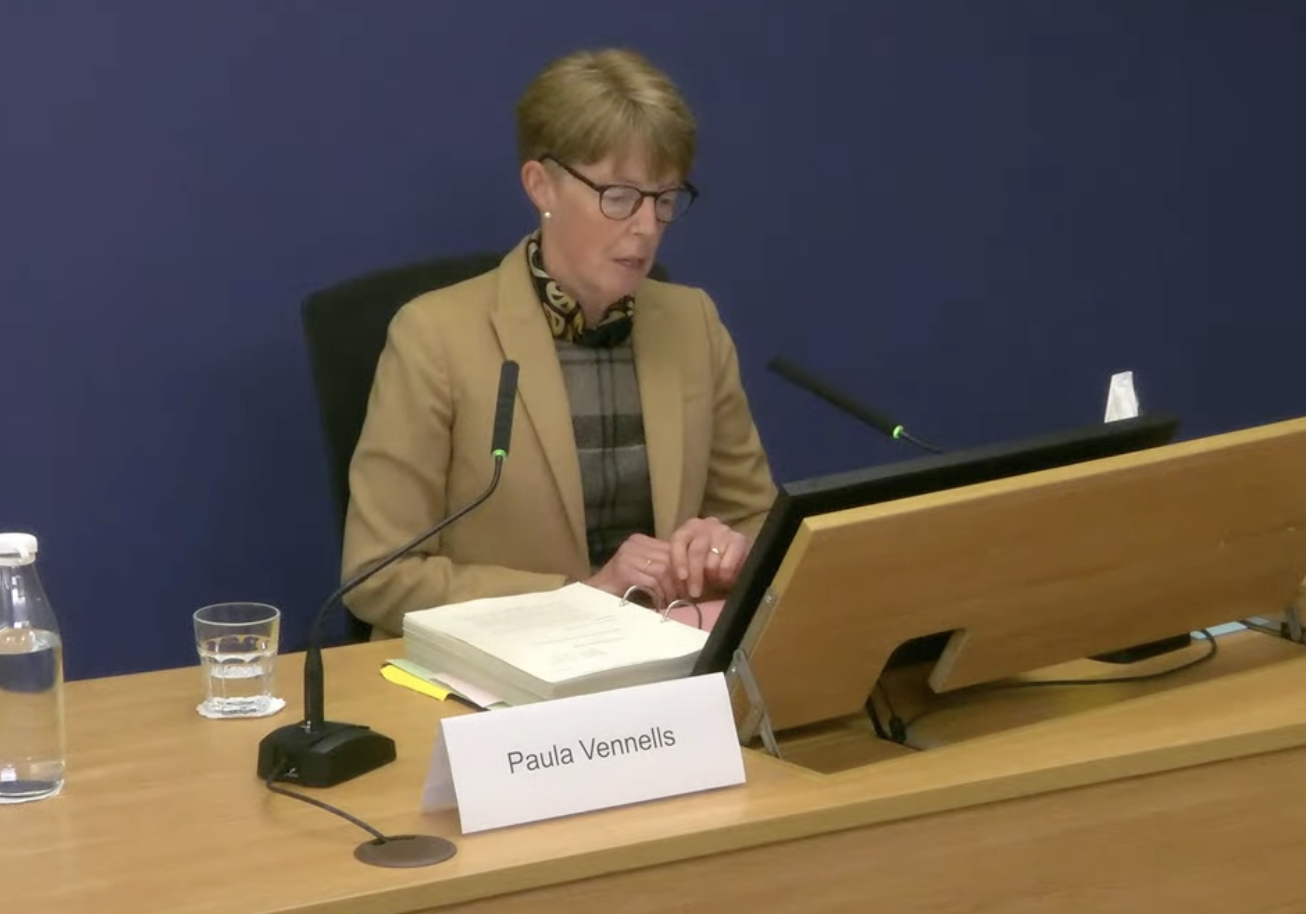
It takes extraordinary disingenuity to Seema Misra by not excluding a witness who was – in your words "shot". When the Clarke Advice was eventually disclosed in Nov 2020. Is that a clue which might explain the long suppression of that document. Gareth Jenkins was lurking in the twilight of the GLO – a ventriloquist for others who gave evidence. How can you justify the protracted group error that kept the Clarke Advice from SM for eight years. The most deluded people choose to disregard what they already know. How much would have to be ignored by so many people for so long…
The right thing to do in 2010 was staring them in the face because Seema Misra's case held the floodwaters in the damn of others claim. PO lawyer Mandy Talbot knew this as she said that if they lost it would be hard to stop civil claims. The Clarke Advice was suppressed.
The PO told the CCRC lies about H. It was pretending to be helpful whilst dripping poison in its ear. No one wanted to help Misra by giving her a free pass. Subposmasters were described as cockroaches. The Clarke advice could see the dominoes begin to fall.
EH finishes. Well – Chair stops him so we can keep to time. Short break then reconvene just before 11am for next set of submissions from Howe and Co which I suspect will be Sam Stein KC who is in the room.
A few quotes from the last session:
"The right thing to do in 2010 was staring them in the face, but they could not do the right thing because Seema Misra's case held the dam for the floodwaters of… claimants whose lives have been destroyed by the post office's actions and we know that from the emails of Mandy Talbot [PO lawyer] where she said that if they lost the Seema Misra trial defending those civil claims would be difficult if not impossible. Those teeming floodwaters threatened to submerge the post office so even though Mrs Misra ought not to have been prosecuted at all that document [the Clarke Advice] was suppressed and I regret to submit but it seems inescapable that the same considerations, the civil crossover claims, the perverse and perverted decisions of disclosure in one being used to support and buttress the defence of the other"
"Roderic Williams during his telephone call with Martin Smith on the 2nd of September 2013 wrote down eight words which spelt out the consequences for the post office should its wrongdoing ever be revealed, including of course that it had dismally failed in its duties as a prosecutor and was far more responsible for these disasters than the unsafe witness that it had failed to instruct, and those eight words were those that I've already mentioned. Those eight words were "damages, restitution of money received, loss of compensation". This was an existential threat that had to be contained, and Roderic Williams knew that on the 2nd of September, a week before the [Brian] Altman Disclosure Consultation. He would have had no reason to withhold that knowledge, that apocalyptic knowledge that he had acquire. from Smith about the post office's failure to instruct Jenkins. He would have been duty-bound and no doubt anxious to report what he knew to those with whom he worked or instructed and we say sir it is the dissemination of that knowledge which may explain why the Jenkins [advice] took years years to emerge and was avoided, overlooked at the Altman consultation and subsequently. Because you see on the same day that Roderic Williams spoke to Mr Smith, the 2nd of September 2013, there is an interesting exchange of emails involving Ms Vennells and Flemington forwarded emails to her from Mr. Richardson and Mr. Parsons of Womble Bond Dickinson. Now the post office in its written submissions doesn't refer to any of those emails and the reason we suggest is because they would sit ill with the suggestion that the CEO and therefore potentially the chair and the board were not fully sighted at that critical juncture on the risk of an overturned conviction and the malicious prosecution claims that would follow. What the post office is trying to say is that its corporate mind was divorced from and not responsible for that betrayal, that non-disclosure strategy, that almost sadistic strategy of delay that caused needless suffering, blighted so many lives, which was just fortuitously hatched on the 9th of September at the Altman disclosure consultation. The post office at paragraph 65 and 66 [of their closing submissions] claims that a horizon risks advice note drafted by Womble Bond Dickinson in August never got to the board, that there was no evidence that it got to the board, that there was no evidence that it was shared with the board or later summarised with the board and then they this, "This may explain why the post office appears not to have focused on the real risk of convictions being overturned and claims for malicious prosecution at an earlier stage." Well there is evidence, but they haven't referred to it. The evidence that showed that the lawyers were telling Ms Vennells not to do anything at all that might promote proactive criminal disclosure. The emails that the Post Office have not referred to, the second of emails that Hugh Flemington forwarded to her from Simon Richardson and Andrew Parsons said this. They were advising Paula Venels not to conduct a lessons learned review and she read that advice and she "understood" it."
That last one is the crucial heart of the conspiracy claim.
The hearing has started. Sam Stein KC (SS) is giving his clients' closing statement on behalf of Howe and Co who represent more than 100 SPMs.

SS quotes Louise Dar – a lead claimant in the GLO who is still waiting for compensation. Wonders if it will ever come to an end.
SS This was never a computer problem. It was a people problem caused by "cruelty, callousness and connivance and people are still suffering fom the consequences"
My clients take comfort from the fact the appalling behaviour of Stephen Bradshaw, Paula Vennells, Alice Perkins, George Thomson and many others has been brought into the light. The PO imported policies from the last century to cover an IT system without changing the contract. The PO was charging towards the iceberg with the SPMs locked in the hold.
The helplines told the SPMs they were the only ones. That they should pay up. I remember the CoA aftermath tidying up our papers. I met a young woman crying on her own. She said "I thought I was the only one. That's what they told me."
The High Court judgment bug table is no more than what Mr Justice Fraser could discern from the evidence at the time. We will never know how many there are. Even now, SPMs are still paying off shortfalls. We don't know the bugs in the current system. The system is careering out of control. It has no back up. Fujistu (F) dare not turn it off because they don't know if they can turn it back on again.
There are still black holes in evidence. We are told helpline stuff read from scripts. We have been asking for those scripts since 2021. No scripts. Our clients don't believe they have vanished. The PO has buried evidence, peddled the dishonest line about the robustness of H.
And now says it can't find the scripts. Money. Where has the money gone? The money impossible to trace would be held in suspense accounts. We think the money put in suspense accounts would be available, but the PO has never wanted to look into this and is hoping time will obscure it.
In POL00040805 Chris Aujard says he wants to give Second Sight no more info than is necessary about suspense accounts. The money that will be never found is the money used by SPMs to balance branch accounts from their own money.
The SPMs we represent believe they kept the PO going by subbing it. They do not, therefore, accept the term compensation – the schemes give them their money back. Stolen by the Post Office as Sir Alan Bates put it – the schemes are about redress. I don't have the time to go into the details of the schemes. You know them well.
You have delivered an interim report on compensation. Each hearing you held was preceded by an announcement which moved things forward.
Maureen McElvey from NI says she was an SPM from 1990 – 2001 in Omagh. They were respected. Family rep is v important here. I worked for 10 years with no probs, but as soon as H arrived money began to disappear. I was suspended in 2001. The trial took 5 years to come to court. over 1 week, the PO used evidence which it said showed my false accounting. The PO used evidence which was actually from when an area manager was in my branch running it whilst my son was in hospital. I was acquitted. the press were outside court. Two people from the post office security team took me by the arm and led me away telling me I was not allowed to talk to the media.
I fell into financial difficulties and applied for an IVA
"I lost myself"
I am still waiting for compensation. I want the time back.
[SS is making it clear MM and his other clients are concerned that the compensation schemes will get worse and slower after the Inquiry ends and reports. Notes that the infected bloody inquiry chair, Sir Brian Langstaff recalled Rishi Sunak and others to get them to explain compensation matters and even after reporting has kept the Inquiry open to monitor the compensation schemes. SS asks that SWW does that with this inquiry otherwise there is no independent oversight of the schemes and the concern is the PO will revert to litigation]
SS says that the three reps of the main SPM groups went to the PO to try to sort out the GLO compensation scheme, but came away with nothing so it looks as if some of the Bates v Post Office cohort will be going back to court…!
As lawyers and judges we all want to be trust – trust becomes its own duty and its a hard taskmaster. You have the SPMs trust – we ask that you retain oversight of compensation. We know you're going to have a busy NY it is an additional burden, but SPMs ask it of you.
SS turns to restorative justice. This was raised in Dec 2022 and was accepted by the PO. It can plug the gaps in financial redress schemes. On 4 Nov 2024 Simon Recaldin from the PO said there was no provision for family members in the compensation schemes. RJ could help them.
We proposed ongoing psychiatric and counselling support. Bursaries. A tangible memorial that records SPMs feelings. We suggest the PO museum in London might be the best location for this.
[having gone there this half term I can confirm the PO scandal has been completely airbrushed from the museum's version of the PO's history]
It was a striking feature of the Human Impact hearings that the stigma of the scandal endures in a number of cases. Marion Holmes who is here today gave evidence in Leeds – she brought her picture of her deceased husband Peter. She wrote to you to say he was a former police officer and became an SPM. He wrote me a letter about the training he received on H – saying it was appalling. He was desperate to get better training and threatened to resign. He didn't resign. In 2010 he was convicted of false accounting. It was devastating. Everyone knew him. He became a shadow of a man. He did not live to see his conviction quashed. I hold three groups responsible for this…
… scandal. The PO, govt and F. They should all be held responsible, but I think after this inquiry they will all carry on as before. Please sir, don't let this happen.
SS goes to F's Paul Patterson's acceptance F might have a role to help with compensation. When he came back to give evidence, he pleaded an inability to do anything as they had no experience of doing such a thing. He puts up a doc called The Fujitsu Way which claims to hold itself to high standards.

SS takes us to p3

And empathy…

SS says F is betraying this. He addresses board of F Japan and tells them to empower Paul Patterson to do something. It is not an admission of liability. It is an oppo to make something good arise from the ashes of this scandal and might lead to the restitution of F's good name.
SS brings up the PO transformation plan from Oct 2024 – which was given to CPs in Dec this year

Goes to page dealing with new deal for SPMs
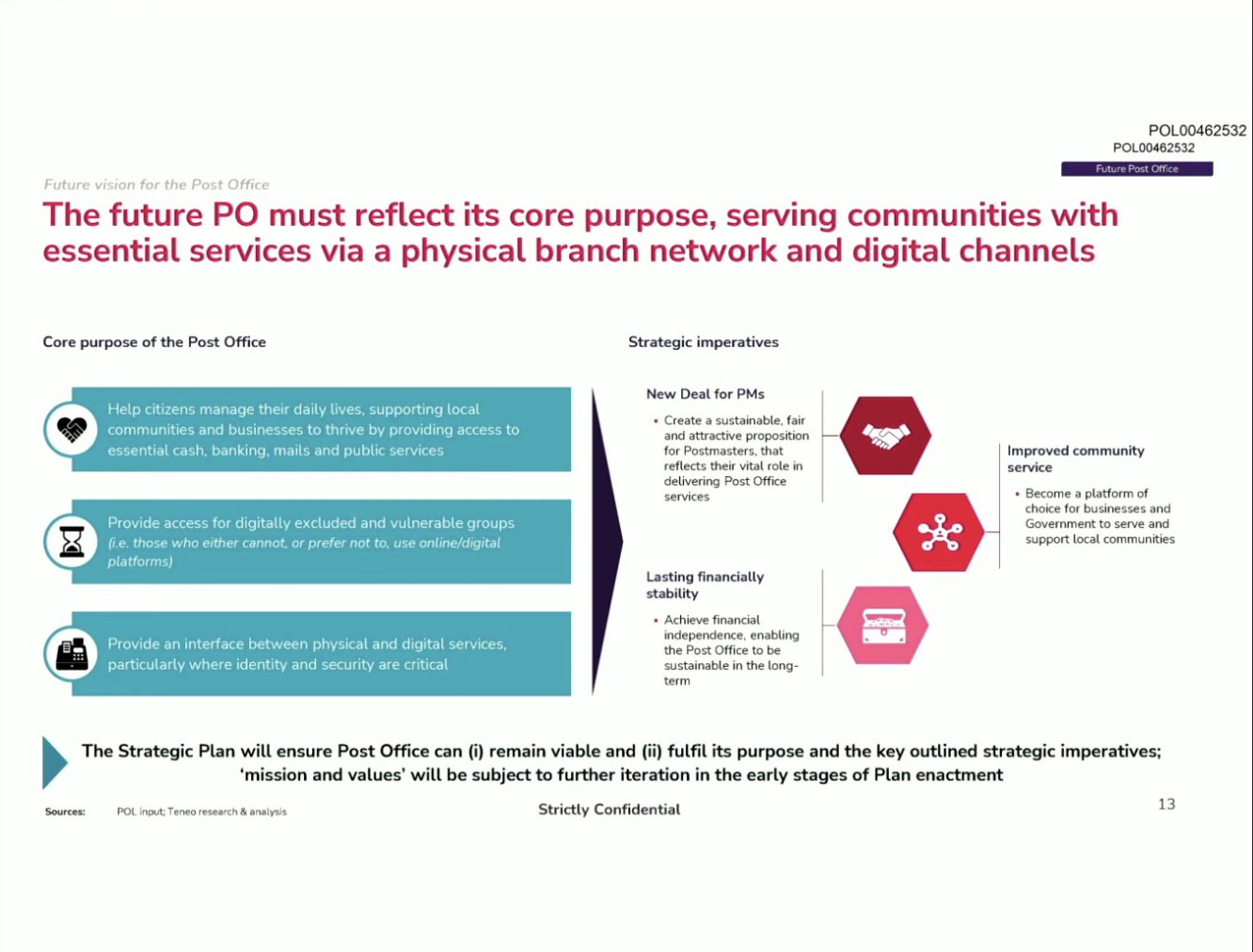
This does show an increase in remuneration, but it falls far short of what is required. We request more time from you sir to make submissions on this document. If the PO is allowed to continue it should guarantee a living wage, whistelblowing rights, a listening and investigating organisation and a chief inspector of POs to look at the culture of the place and welfare of SPMs.
SS goes to evidence of Pam Lock from Wales. An SPM with a bakery. They got up at 1am, worked til 5.30pm and went to bed at 8pm. We were proud of our business and worked hard. We worked fine until H arrived. I found myself numb in court pleading guilty to false accounting. My daughter was crying in court. We lost our home. I was front page of the local paper. When my conviction was quashed I felt relief but it can't make up for the lost time. No one has been held accountable. Of course it was the IT system. I want the PO to pay for a front page ad in the South Wales Evening post with a picture of me then and now and the headline "Pamela Lock was innocent"
SS raises Brian Altman KC's failure to mention his own disclosure failures to the CoA – he represented the PO but he was a witness to those events. Only the PO was seen to be at fault by the CoA, not the lawyers. How did so many lawyers mess this up. Simon Clarke said in his evidence to the Inquiry that he was giving advice to a private client. They had become company men. Otherwise there would have been an immediate police investigation.
SS says Law Commission should review to the presumption of reliance of mechanical instruments.
Bugs in IT systems may not be readily obvious to those using them. This is relevant to the terms of ref. Whatever guise the PO operates there will be an IT system. There needs to be consideration about how the system can be considered correct.
SS effective whistleblowing procedures do not cover the ways all individuals work. We need legislative changes. SPMs, NEDs and those outside employment. Should be all at any workplace who sees any wrongdoing and may suffer if they bring it up. Whistleblowing law needs to be extended.
SS pays tribute to Kay Linnell, her partner, Lord Arbuthnot, Computer Weekly, Little Gem and others who have kept this story in the public eye.
SS reflects upon Stanley Fell whose appeal was dismissed and those who died before the Inquiry concluded. People who suffered and had their reputations destroyed. Thanks SWW and inquiry team for their hard work and dedication.
[Ends. We have a break. Back at 1205]
[Now an hour from Tim Moloney KC who represents, I think, more than 100 SPMs on the instruction of Hudgell's solicitors]
TM brings up Julian Wilson – one of the Shoosmiths claimants from back in 2011. JW is no longer with us
(I wrote this shortly after he died: becarefulwhatyouwishfornickwallis.blogspot.com/search?q=julian+wilson
TM lists a few of the others. He reiterates his thanks to the Inquiry for the way they have treated SPMs. TM reads out some of Tim Brentnall's closing statement during the Human Impact statements – copied here www.postofficescandal.uk/post/tim-brentnall-s-closing-statement/
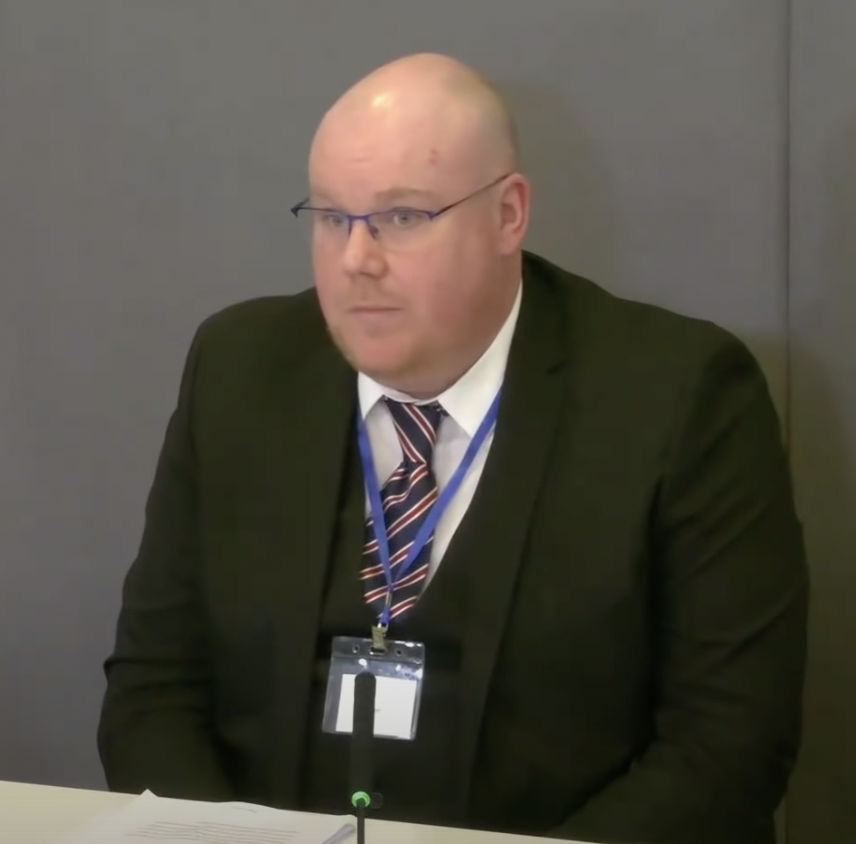
TM says that Tim now writes to say the Inquiry team "deserves enormous thanks… they have all been as helpful and as accommodating as possible"
TM we invite the inquiry to consider that this inquiry may not be the last step in accountability. The Met Police is a CP and may consider criminal liability. The Inquiry must make recs within its terms of reference. The q of who knew what and when. This includes avoiding info and failing to confront risks. There were people who were reckless to the truth and wilfully blind.
We urge the inquiry to investigate behaviours responsible for this scandal. We know about memory. The inquiry has contemporaneous documentation. We have been surprised how people with poor memories suddenly remember in detail episodes which show them in a good light. The excuse I was poorly advised is no excuse when the advice requested is framed to get the wrong answer.
Contrition now seems self-serving. This scandal would not have happened if F and PO acted on the idea H was not infallible and listened to their SPMs. This is also about poor decisions in govt. The government kicked the wrong can along the road and left the wrong people in charge.
Transparency and accountability really matter. This inquiry has brought some clarity on how the PO wrongly prosecuted 100s of its own people.
The response to any q over integrity of H was defensive. Phases 5 and 6 of the inquiry showed how the actions taken year on year kept the truth from the public domain.
The unblinking defence of H did not start in 2013. It was doubled-down on then. The PO knew from rollout that if the PO was to survive it had to be H-centric. There was no plan b. Jeremy Folkes raised a red flag in the early days but it was "too big a reality to face", and so it wasn't.
Contd refusal to accept the PO's approach to H and prosecutions was a cause of concern. Refs the Ismay report (read about that here): www.postofficescandal.uk/post/the-ismay-report/

Any critical external view of H was forgotten ignored or diminished or its circ was limited to the extent it was hidden. Docs which damage the PO's view of H had a v limited circ. F did not pass everything it should in the way it should. When bugs were passed on they were explained away as fixed or not a problem. E&Y raised the flag on remote access in 2011 and 2012. Alice Perkins was told specifically about this at the start of her evidence, despite her apologies.
Donald Bryden was questioning what he read in Private Eye, a glaring warning, but it was dismissed. Second Sight was apparently a sea-change in the pO's attitude, it wasn't. It was seen as a way of shutting down parliamentary pressure. When SS were not man-marked by Susan Crichton, they had to go. After SS the PO should have been on alert, but it was on the defensive. It was not incompetence. The actions of the PO invite close scrutiny. Individuals shut their eyes to info which did not support the narrative. Worse it may have been buried.
The Clarke Advice was seen by many lawyers. It went to the GC and BD. With Gavin Matthews from BD and Susan Crichton from the PO discussing implications. It ought have gone to the board and the CCRC in 2013. Plainly cases where H integ had been in issue. Had a proper inquiry happened…
… a range of other issues may have come to light. Jenkins' lack of proper instruction. His far wider knowledge of bugs etc
The CA should have been disclosed without delay. Instead the narrow focus of Cartwright King and the PO was exposed. We know sufficient info was passed to PV and Alice Perkins. SC testified she would have briefed PV on the contents of the CA. Agrees she would have known about Jenkins in August. But says she wasn't fully briefd and did not know import. Doesn't stand up. Same with Alice Perkins. It's incredible. The inquiry will determine if the lack of curiosity is credible.
PV says she told her chair (AP) what she knew including the unsafe witness. Reckless incompetence on behalf of all. The board had GC's board paper which she was not permitted to present. Whatever was in that paper caused the board to consider their personal liability. How did they fail to assess the risk to the business. They knew Gareth Jenkins could no longer be used as a court witness. Did no one ask why not?
PO was wholly driven was a desire to protect the brand and its commercial interests. They never asked "is this thing working" or "are we in the wrong" it was all about defending themselves from attack.
TM raises 2014 email from PV saying she was "bored" by plight of SPMs on One Show piece and that Jo Hamilton "lacked passion". An email she shared to her board, colleague, and chair twice.
TM goes to 2015 "need to know" remote access email before the select committee hearing. Then mentions privilege assertions over everything and how it was wrong, as accepted by PO lawyer Rodric Williams. Notes PO had little or no understanding of its duties as a prosecutor.
When problems were escalated through the business there was a wholly inadequate response. The response always fell short. Project Zebra and the PZ action summary was an exemplar. PZ was so closely guarded that when disclosure was eventually given the name remained redacted for privilege. Noted as absurd. Why is it all PO docs have such limited circulation. PZ was designed to satisfy the board all was well. The business was plainly aware of problems H back then. The board summary had important information about remote access – saying it was there in an undetectable way in 2014. That was not disclosed.
Ismay who wrote the whitewash in 2010 was also in the mix. Accountability must happen for these people. Was it missed or dodged? The defend at all costs attitude of the PO and failure to disclose and let people know about problems. The evidence heard by the inquiry fully justified Mr Justice Fraser's criticisms.
Whilst the decision making processes of the PO were front and centre. F remains v important and we address this in our written submissions.
PO approach to investigations was deeply and fundamentally flawed. Wilfully blind to proper administration of justice. Focus on commercial position of PO took precedence over consideration of faults. Since Phase 4 we've had more on investigations in phases 5&6 – built on a toxic premise and run by incompetents.
Mentions project Phoenix and how the PO was only prompted to do this by the Inquiry and SPMs. [Project Phoenix was instigated when the Post Office's use of people responsible for the scandal were working in the remediation unit and making decisions on compensation)
We invited govt to conduct a review to conduct private prosecutions. The HoC justice select committee recommended an inspectorate for private prosecutions. Govt rejected these proposals. We invite them to revisit that decision. Now – regulated legal professionals. PO lawyers both in-house and external…
… this scandal has seen lawyers fighting a rearguard action for PO in all capacities. Civil proceedings – which led to bankruptcy of Lee Castleton – and the Shoosmiths litigation – really bad behaviour. Advice from Emily Springford (re privilege) became the orthodoxy in the PO
– if John Scott did shred docs – it's only part of a piece with the way the PO went about things.
The instruction of Gareth Jenkins was "inconceivably poor" and the idea no lawyer noticed this is "difficult to believe"
Cartwright King – who conducted a review of their own prosecutions were marking their own homework and this only weeks after securing a PI cert with the express intention of preserving the reputation of the PO. If another, independent firm were appointed (as Altman agreed they should have) it might have been very different.
TM suggests stronger guidance needed to firm up BSB and SRA and if they don't then their independent regulation role might be taken from them.
TM points out that PO's H prog director David Miller who signed of the settlement to Julie Wolstenholme was the same exec who told the PO board before rollout that H was fit for purpose. Something he agreed to the inquiry was wrong. [that's a very good point. Miller is up to his arse in this, but I bet he's not being looked at by the cops]
TM any assertion of ignorance of PO prosecuting function and H integrity should be treated with sus. David Miller told inquiry it was clear to him and he was an exec member till 2006.
TM no one considered the SPM when H was rolled out. Post 2013 there were numerous failures. Those failures must be viewed in context of "defensive retrenchment" on H and a "toxic culture" – PV and AP and govt singularly failed to halt this scandal despite the opp to do so.
"Incompetence", "wilful blindness" and "inertia" are key components of this scandal. Board was not effective. Are board effectiveness reviews the best way to see if boards are operating effectively?
There was failure of oversight -UKGI and govt more generally needs to learn from this.
TM goes to redress, restorative justice (RJ) and restoring trust. Ministers say they want full and fair compensation. It not been prompt and in many cases it has not been either full or fair.
The retraumatising experience of applying for compensation has been well-documented. Many are living in poverty whilst waiting for compensation.
On RJ we welcome F and govts potential willingness to engage with Lost Chances for Subpostmasters. When the actions of the state harms its citizens this is more than just about an oppo to generate good press. it needs to be more than about compensation and should come through schemes designed to restore trust.
Final topic – where are we now. In Oct 2024 outgoing PO CEO Nick Read said an H replacement was urgent. In Dec 2024 a new deal was signed with F for H. Whilst the new deal for SPMs was trumpeted by the PO in Nov – it's nearly 5 years since the 2019 judgments.
In failing to grapple with the IT problem in 1999 and again and again since – successive govts have failed on IT making PO lose sight of true value of the network and all in it.
PV and AP knew that if H were to fail, the mutualisation of the PO would not happen. What happened to the SPMs can never be allowed to happen again. It is simply not acceptable for hardworking people to be collateral damage in the pursuit of commercial imperatives.
In communities across this country the role of the SPM is of high net worth. And although the PO see the SPMs as subbies with hands in the till, this inquiry has supported them. They now await the findings of the inquiry.
[TM ends and we will resume just after 2pm]
Apologies to keep flogging this, but it's only been announced today. I'm writing a new book about the Post Office scandal called The Great Post Office Cover-Up. More info here: www.postofficescandal.uk/post/new-book-now-on-pre-sale-the-great-post-office-cover-up/
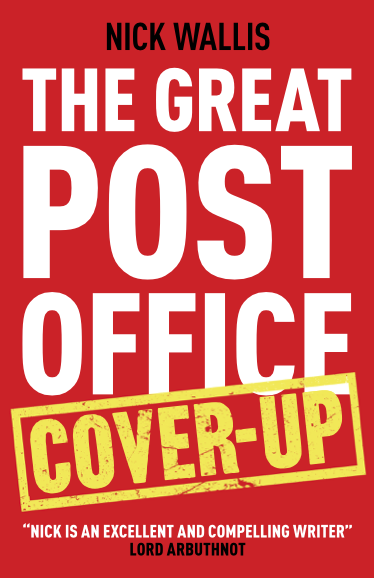
Here is the piece which has gone in the Bookseller magazine: www.thebookseller.com/rights/bath-publishing-acquires-second-book-on-the-post-office-scandal-by-investigative-journalist-nick-wallis
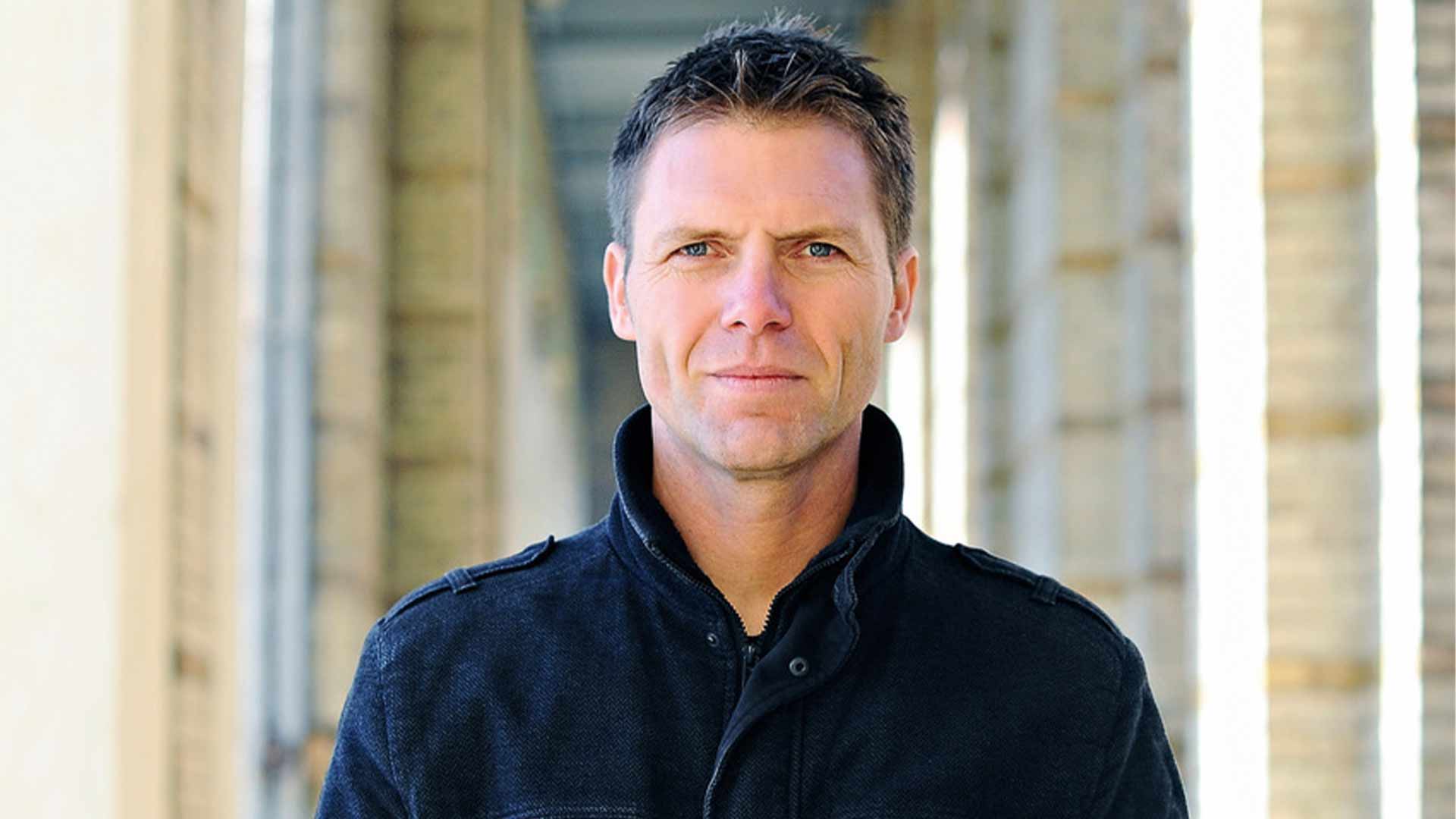
We are back after lunch and Stuart Munro, who represents a sole Scottish Subpostmaster Susan Sinclair, is demonstrating the very clear differences between Scottish and English law and quite how ignorant the Post Office was of its legal position in Scotland. It's a useful primer for legal students. The Fraud Act does not apply in Scotland.
And corroboration is a big thing – no one can be convicted on a single source. Horizon was (perhaps predictably) used as a strong source of corroboration.
This is Mr Munro in flow

You can watch proceedings live here:
www.youtube.com/watch?v=V9sfYeGnEzA
Catriona Watt (CW) for the @NFSP_UK on her feet.
CW starts by thanking the Inquiry. Endorses and adopts Subpostmaster CP recommendations re govt and Vennells and written recs of Howe and Co.
@NFSP_UK Whatever the PO motto is today – Abandon Hope All Ye Who Enter from Dante's Inferno was metaphorically across the door of those who fell foul of H and the PO's toxic culture, culminating in full scale defence of GLO. There seemed to be no hope for those advised to plead guilty…
@NFSP_UK … told they were the only ones etc etc, all at the hands of the PO. In the Greek Myth of pandora's box, hope remained inside the box. Hope, sir, lies with you. There may be an outcome from your report which ensures the H scandal cannot happen again.
It is submitted by the NFSP that we sit between hope and fear given what we heard in phase 7 of the Inquiry. SPMs have been ignored. True engagement has been illusory. Everything said to the NFSP by the PO has turned out to not be true. NT would transform earnings of SPMs…
… not true. H is robust…. not true. All losses are recoverable from SPMs… not true. Prosecutions are safe… not true.
Those whose lives and finances were ruined do not have the redress they deserve.
What we heard about the H replacement NBIT and its canning echoes the disasters we heard about H in phase 2.
The PO has not changed. The appt of the SPM NEDs to the board gave hope it had. Then we heard they were both under investigation. They said they felt they were being ignored. They can't vote on remuneration. The NFSP does not believe that increasing SPM NEDs is a solution is the solution.
SPM NEDs have no way of engaging with the wide and diverse views of the SPM population. They must not be the last word in SPM representation. It's not their job. Any SPM NED who thinks they can change the PO's strategy potentially has a conflict in the Companies Act which says they have to act in the best interests of the company. The PO will try to control every narrative.
The timing of what is being said about the future is incomprehensible – the announcement of the the New Deal was made public on the last day of Phase 7 – just when the Inquiry's experts were talking about the PO's dreadful governance. The plan was published without consultation with any union.
The strategic review presentation pack had no deal – it introduces a Postmaster panel – this reinforces rather than changes things. It is an illusory mechanism whilst giving the PO control. The panel will be approved and run by the PO and will only be formed after the govt has approved the PO's plans so will have limited scope.
NBIT is the perfect example of how little has changed since the Inquiry started. The PO's governance is still terrible. How could it let NBIT happen.
A franchising model rather than mutualisation transfers risk to the SPM even more than now. Might have to pay the PO. Will have to bear IT risk. We should mutualise. Postmasters today are facing an attrition of business and govt work promised under NT did not materialise.
In fact we're still losing govt work. We campaigned to keep DVLA work. The govt and PO have been unwilling or unable to invest in the network.
Early reports of the new deal suggests there will be a decrease in central costs. No detail on this nor how SPM pay will increase. We've had network reinvention, network change and then network transformation – none of these works. NT in particular was sold to SPMs and NFSP…
… and it was a disaster. It made SPMs poorer. This new deal was an oppo, but it did not consult with the NFSP or Subpostmasters. No feedback on it sought before publication. The announcement of the new deal means the inquiry cannot respond to it given it is part of its terms of reference.
The details were only shared in December a day before final written submissions were required by the Inquiry. Not sure if this was deliberate but it has meant the inquiry cannot scrutinise the new deal.
You may need to reconvene the inquiry to scrutinise the new deal to fulfil your remit.
The PO's failure to grasp the issues of oversight and governance means the NFSP's proposal for an oversight committee should be taken forward.
The Grant Thornton reported that their was a lack of accountability, decision-making forums did not understand objectives, misalignment on govt, PO and UKGI made working relationships difficult.
Dame Sandra Dawson said a functioning board which properly challenged the exec was the best way forward. The PO is nowhere near that. The transformation plan without consultation shows Dame Sandra's ideal is some way off. Since the GLO time and time again the PO has failed to change
It's merrily tried to pay itself full bonuses, the uplift to Nick Read's incentive payment, the inquiry bonusgate, past roles review/project phoenix, NBIT etc. Something urgently needs to be put in place. Sir Alex Chisholm was up for this even tho he said in a perfect world you wouldn't need it.
We need an independent oversight committee outside the control of PO and UKGI.
CW calls up a the oversight committee proposal doc

Goes into it:


And…

The NFSP's oversight committee shall

And will be made up of…

And these are the gaps it will plug….

Reiterates that something independent of govt and PO with power must be set up.
Moves on to past roles which is about individuals partly responsible for the scandal who are still in the business. She names
Tracy Marshall, Roderic Williams, Nick Beal and Martin Edwards. The latter is PV's former Chief of Staff. He is now going to implement the PO's new deal strategy.
Why was it ever considered appropriate to involve people who had roles during the scandal to the remediation unit. What, also is with the "untouchables" issue – a word Nick Read denies using despite three people saying they heard him say it.
Raises Project Bolland – a failed attempt to find the missing money could be dropped by the PO without Inquiry scrutiny.
We discuss the past in our written submission. We take this oppo to apologise for the failures of the past. When we were fed the line by the PO that H was robust. When the former Gen Sec George Thomson was told he did not act nor did he share the info with others. GT forwarded alan bates correspondence to the PO calling it rubbish. He should have challenged the PO. He did not. We are truly sorry.
The PO and Govt were able to rely on GT for the "H is robust" mantra. The NFSP wants to be clear to the inquiry that H was rolled out in 1999 to NFSP's ending of being a union in 2014 we were the same as the CWU. We do not provide legal rep in criminal trials. Both CWU and NFSP..
… took assurances about H from the PO at face value. There was no difference between the NFSP and the CWU.
The inquiry will have seen the closing submissions of the CWU which calls for union representation of SPMs. The NFSP has got rid of the requirement not to criticise the PO. Our CEO Calum Greenhow has demonstrated real learning on behalf of the organisation.
[lists a lot of changes and work done]
It was reasonable for the NFSP to believe what it was told about H, certainly in its early years.
Nothing that the Inquiry has heard could suggest the NFSP of today is a puppet or patsy of the PO. it is not. The NFSP asks the inquiry to take into account its submissions of phase 5 and 6 in particular the timeline.
The 1000s of SPMS who are members of the NFSP need such a body. Informal groups with a few hundred members here or there can get absorbed into its corporate structure. The organisation criticised by Lord Justice Fraser has learned and adjusted and is the true campaigning voice for SPMs.
The PO has broken every element of trust there ever was but it is still needed. SPMs have invested their time money families and lives into this. The PO needs proper oversight. SPMs serve their communities every day. The good that SPMs do is vital. It must be valued and protected.
The NFSP has faith in the findings of the inquiry will serve to protect SPMs who have served so well for decades. The Inquiry has heard so many "I don't recall"s etc – but it has the doc evidence. facts that cannot be denied. The trust of the SPMS and the public lies with you.
[CW ends. We have a short break then the final submission of the day from Neil Sheldon KC who is making closing submissions on behalf of UKGI]
NS is on his feet. Says he has not addressed inquiry since 2022, but has submitted written statements to phases of the Inquiry. We have endeavoured to be frank and self-critical. We have provided you with a lengthy set of written closings. We have sought to focus on the present situation
… to address head on the issues of concern which we suspect might be raised.
Here is Neil Sheldon KC

We wish to address directly the purpose of the task with which we are engaged. You don't need me to tell you of the utter devastation of so many lives. They likely wont want to hear yet another expression of sympathy of an institution which could have done more to stop it happening.
We have had our responsibilities to SPMs at the forefront of our minds throughout and a determination to ensure nothing like this can happen again. it has informed every aspect of every submission we have made. We must objective and self-critical and transparent and willing to learn lessons.
We stand by those obligations and understand that we will be and should be judged by them.
It seems to us from the evidence you have heard there were governance failures in which UKGI and its predecessor ShEx played its part. We were too ready to listen to the PO and dismiss SPM concerns as baseless. We could have done more. Investigations were started, but they were not followed through. We were not objective enough. We just reflected the PO's view. We've read all the written conclusions. In some respects we agree with the criticisms of UKGI. Where we disagree we have said so. We have tried to be as frank as we can.
We're not going to start blaming others or avoid responsibility. Corp gov (CG) goes to the heart of what we do and it should have been delivered more effectively. I doubt there has been a clearer example of what can go wrong if CG goes wrong. On the totality of the evidence we should have provided more robust challenge and curiosity.
For our failures in this regard we apologise unreservedly. We don't think there is any evidence of any ShEx or UKGI employee engaged in any cover-up. It was just a lack of curiosity or objectivity. Re UKGI or ShEx employees – no defects with H were concealed denied or obfuscated. Same with wrongful convictions etc. No evidence, none put and no support for any suggestions. We have not found any. If we did, we would have told you.
We should have clocked the scandal sooner, but no one sought to suppress any information.
My focus this afternoon is how UKGI looks to deliver effective governance oversight to all our assets.
The shareholder model or framework over which we try to extend CG is fundamentally a sound one. There are over 300 arms length bodies. The most complex are outsourced to UKGI.
I'm going to focus on how effective CG should be delivered within that model to portray how the system should operate.
The first level is frank, accurate and honest reporting by the exec to the board. Identify a problem, tell it to the board and the company culture should allow that. Then second level is challenge from an engaged proactive and competent board. It is entitled to expect correct info
but it must test it. It has a range of tools to do so. The shareholder NED as a board member must play a part in ensuring that is done.
The third level is the shareholder with responsibility for the asset. ShEx was a directorate of DBT until UKGI was created. Frequent interactions at a variety of levels are important at all levels. Through this interaction the dept become aware of the way issues are being dealt with by the company.
It is not the role of UKGI to run the PO. That's the job of the execs overseen by the board. Nor is it the role of the shareholder to act as a shadow board or executive.
We should not run assets or second guess the exec. We need to assess risks and support companies when issues arise. UKGI is a learning org which seeks to evolve to incorporate CG standards in its practice. We recognise effective shareholder oversight of a company not providing a full account of problems is difficult. The history of corp scandals is littered with boards which failed to spot problem. The PO board had a number of highly skilled experienced individuals who missed the rising scandal. As did ShEx/UKGI. Many have said they would have welcomed the challenge of being told what was going on. But it took the GLO to reveal it.
We need to have an "open no surprises culture of frank reporting". We need to assess the culture of every organisation. There should never be an example where the executive is less than open or frank with the board. It cannot happen or the shareholder's ability to act is diminished.
We now have a clear emphasis on corporate culture which runs through our training and methods. We need to monitor and report on the state of the culture within our assets and take steps to promote a healthy corporate culture.
The PO board did not display adequate curiosity or challenge. It relies on the exec and trusts it for info. It can ask questions. It can direct execs to find more info and it can undertake investigations itself. During scandal it did this – after the SS interim report
… the commissioning of the independent assurance work by Linklaters and Deloitte. Detailed refutations to problems were prepared by the exec and were accepted by the board. The board never ordered a full drains-up review of Horizon which the GLO eventually delivered.
How do we fix this? The first is ensuring the board is subject to a regular and thorough process of evaluation. Board effectiveness review must happen every year with every third year done by an external co – tone culture, clarity of instructions to exec. A separate chair appraisal.
Secondly – clear set of specific requirements of information flow so the board knows what it is being told. legal prof privilege was used as a justification for hiding info. It has been made crystal clear that LPP will not be used as an excuse for hiding info.
Third way is a development of a suite of good practice guidance. we don't have time to deal with that this afternoon, but it's all set out in our written closing, but I will touch on whistleblowing.
Re whistleblowing – the position now is that we expressly require our NEDs to ensure that whistleblowing procedures are adequate and we have set out exactly what this should look like.
The sense that UKGI might have been staffed in the past by investment banking dealmakers is emphatically not the case now. We are much more diverse.
Re training of our NEDs we recognise this was found wanting in the past. We now have a learning and development leader who oversees all that.
Understanding of and compliance with the civil service code is essential for all our staff. Those dealing with the H scandal from 2015 could not see a way forward beyond litigation. That is not an excuse, but it is at least a partial explanation. The suite of resources now available to NEDs to test, escalate info are obvious.
Re separation of shareholder and policy roles. Achieved in 2018 and now established across all assets.
Two essential points. P1 – provision of advice to ministers. In 2015 the issue arose as to whether BEIS should get involved over the H issue. Those concerns were not expressed at the time and the minister commissioned the chairman's review. but the problem in this context…
… is that there is potential between shareholder and policy roles when a difficult issue might get public opinion. How a minister should approach something might generate different advice when looked at a CG perspective and a policy perspective.
It's a potential conflict of interest. Funding is one example. Others may arise. It is important not to overstate the issue. When a company is owned by a sole shareholder as the views of the company and shareholder are likely to be aligned.
When conflicts arise for shareholder NEDs, our view is that these are very manageable. In some cases formal recusal may be necessary. But the NED can convey the views of the shareholder to the asset board so it can advise on their view. What happened re the recusal of justice fraser – it was a unique situation. The NED sought and followed legal advice from the Dept's lawyers and communicated the view from the shareholder to the board.
[this is a specific plea to SWW not to recommend that shareholder NEDs are removed from the boards of arms-length bodies]
UKGI has an important role to play with the PO going forward. We're an interlocutor between PO and shareholder. The PO board effectiveness is being regularly assessed. We have good visibility on the info coming through. There is no avoiding the fact the PO faces challenges in improving its relationship with SPMs and having an embedded culture which sees them as partners.
It is not uncommon for institutional CPs to assert that we are keen to hear what the inquiry has to say. In my experience what the inquiry and the public will expect to see is that the institution has not sat around waiting for your conclusion but got on with fixing its problems.
We started reflecting in 2020. We gave a progress report to you in 2022. This is a further update. We are acutely conscious we cannot undo the mistakes of the past. We can only apologise for what we got wrong and do our utmost to ensure it doesn't happen again.
[NS finishes with a few thank yous to the inquiry team and apologies to SPMs and their families for the "irreperable damage" done to them.]
Thanks for reading today. If you would like to buy my existing book, search for The Great Post Office Scandal. If you would like to buy my forthcoming book The Great Post Office Cover-Up, there's more info here. Be among the first!
www.cintopress.co.uk/the-great-post-office-cover-up.html