
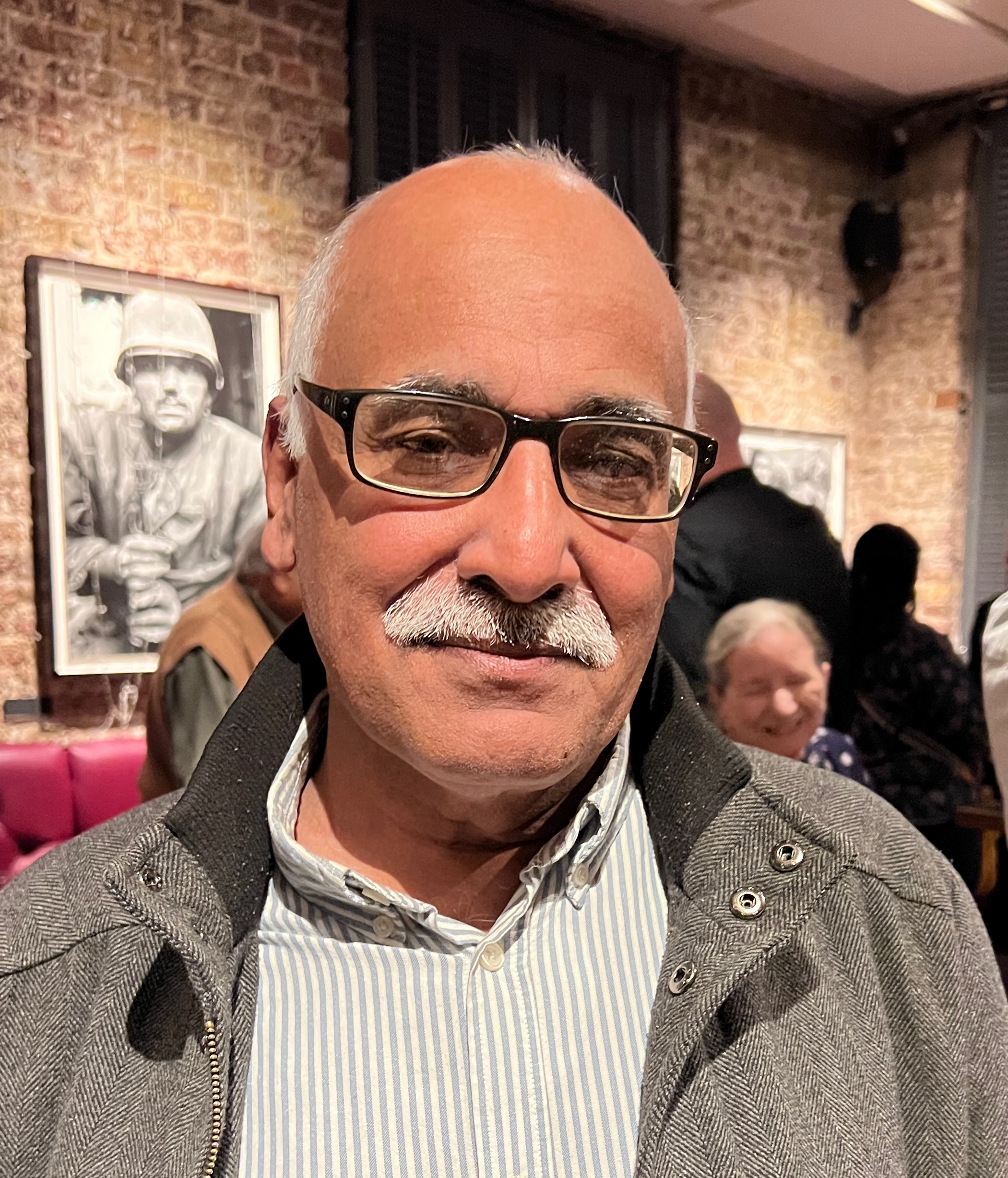
Parmod Kalia has died. He was 67.
His family announced the news on Tuesday, saying “our beloved husband, father, grandfather, brother and uncle has passed away. He was a guiding light in our lives. His love, wisdom and warmth will stay with us always.”
Parmod was one of the most decent men I have ever met. We first spoke in 2018 on the first day of Bates v Post Office at the High Court. This is how I described our meeting in my book:
“Before the afternoon session started I spotted a small, middle-aged man who had been sitting on his own at the back of court, staring straight ahead. There were, occasionally, tears in his eyes. He didn’t seem to be with anyone, so I introduced myself. The man’s name was Parmod Kalia. He was a claimant. He didn’t know any other claimants. In fact, he didn’t know anything about the Postmasters’ campaign for justice until 2015. Until then, Parmod had spent more than a decade living in penury after being sent to prison for theft. Parmod’s career began in 1977 as a bank teller at NatWest. He was 18 years old. Parmod worked his way up to the post of assistant manager by the time he left NatWest in 1989. He had handled money all his adult career. Through hard graft and prudent saving, he put enough aside to take over a retail business with a Post Office attached on Chipperfield Road, in Orpington.
Parmod successfully ran his Post Office from 1990 to 2001 without a single problem. Then Horizon was installed.
In 2001, Parmod’s Post Office was ‘audited.’ His Horizon system showed a £22,000 hole in his accounts. He was immediately suspended. Parmod says he contacted his local NFSP rep, whose only response was to ask how quickly
he could make the discrepancy good to ‘keep it out of the courts.’ Desperate, Parmod went to his mother (who knew nothing about the situation) and asked for a loan. He then handed the Post Office a cheque for the full amount.
Once the Post Office had the money, Parmod was sacked and charged with theft. No one suggested for a moment the Horizon system might be at fault, so it was down to Parmod to prove he didn’t steal the money at his trial. Parmod’s legal team knew it could end badly. If he was found guilty by a jury, he was almost certainly looking at a prison sentence. They suggested he plead guilty to reduce that risk. Parmod was further advised to make up a story about borrowing the ‘missing’ money from his branch in order to mitigate his sentence. He did as advised, and was sent to prison anyway.
The years immediately following his conviction were hard. Not knowing what had happened at his Post Office, Parmod blamed himself. His family blamed him too, for the shame he had brought on them and their ruined prospects and reputations within the community. Relationships broke down, increasing Parmod’s feelings of worthlessness. He hid what happened from his mother, fearing the truth might kill her. Parmod tried to end his own life on three separate occasions. He thought he was the only one dealing with inexplicable discrepancies at his branch and blamed himself for everything that happened.
Parmod eventually found fulfilment in voluntary and social work, but the ‘audit’ which ruined his life, his sacking, subsequent prosecution by the Post Office and prison sentence left him fragile. ‘It completely broke me, on reflection,’ Parmod told me. ‘At the time I was dumbstruck. It didn’t really hit me as much as it does now.’
Fourteen years after being given a prison sentence, losing everything and trying to bury what happened, Parmod saw the 2015 Panorama.
For Parmod, it was a revelation. He wrote to Paula Vennells, the Post Office chief executive, telling her what happened to him must have been as a result of a Horizon error, as per the allegations being made in the Panorama programme. He could see no other reason for it. He sent Ms Vennells all the evidence he had. It is typical of Parmod’s decency that he did not demand Vennells re-open or review his case. He just asked for an apology for what the Post Office had done to him.
He received a reply from Angela van den Bogerd. Years later, Parmod sent it to me. Van den Bogerd wrote:
‘The Panorama programme you refer to in your letter included a number of inaccurate statements, drawn selectively from limited information, to create a misleading and damaging impression of how and why Post Office undertook prosecutions.’
Van den Bogerd told Parmod the Post Office had ‘exhaustively investigated’ Horizon and not identified ‘any transaction caused by a technical fault with Horizon which resulted in a Postmaster wrongly being held responsible for a loss of money.’
Fifteen months before the Post Office would be admitting in court that remote access was perfectly possible, van den Bogerd told Parmod there was ‘no evidence’ of transactions recorded by branches ‘being altered through “remote access” to the system. Horizon does not have functionality that allows Post Office or Fujitsu to edit or delete the transactions recorded by branches.’ Van den Bogerd finished her letter by telling Parmod, ‘If you believe that you have been subject to a miscarriage of justice, you should take independent legal advice. The solicitor who acted for you on the prosecution, or the Citizens Advice Bureau may be able to help you.’
On the day of our first meeting, as Parmod told me his story, I noticed he had difficulty looking me in the eye. It was a condition he told me he’d developed in the years after his release from prison. I asked him why he’d come along to court. ‘It’s important,’ he said. ‘There are people here who can put the case forward that there were problems in the computer system. And I can understand now that there were many others in the same position as me.’
We swapped numbers.”
The Post Office continued to torment Parmod by counting him as one of what they called the “public interest” cases. The first thing Parmod did on receiving his interim compensation was provide for his family and buy a new minibus for the charity which took him in and saved his life.
Parmod died waiting for final compensation.
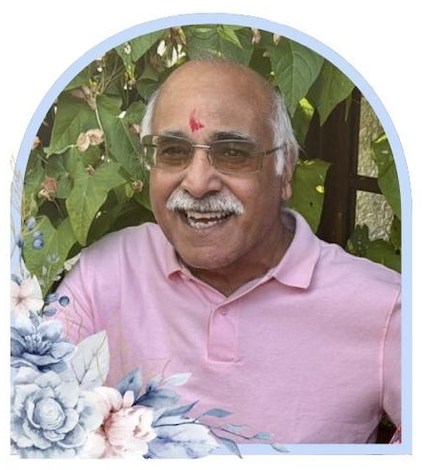
Parmod Kalia 6th December 1958 – 13th March 2026


Leave a Reply to Elaine Nelson Cancel reply