In January 2022 the researcher Eleanor Shaikh was poring over some written evidence submitted by the Business Department (then known as BEIS) to the Business Select Committee in March 2020. In an annex to the evidence, there was a timeline. One line of the timeline read: “September 2015: The Post Office Minister commissions POL’s new Chair to undertake a review of POL’s Horizon system and handling of postmaster issues. Support is provided by a QC.” [POL stands for Post Office Ltd. A QC is a senior barrister – a Queen’s Counsel – nowadays known as a KC].
Eleanor has read more publicly-available documents about the Post Office scandal than most journalists and lawyers put together (see her seminal investigation Origins of a Disaster here).
By 2022 we had already had the epic Bates v Post Office litigation and the Hamilton v Post Office criminal appeals. Thousands of hitherto confidential documents had made their way into the public domain. But none of them matched the description in the BEIS evidence. Eleanor was intrigued. What was this review? Where was it?
Eleanor (who, full disclosure, is also a fellow trustee of the Horizon Scandal Fund charity) submitted a Freedom of Information (FOI) request to the Post Office. She asked the Post Office to tell her who conducted the review, which QC supported it and to disclose both the terms of reference and findings of the review.
Eight months later the Post Office replied, sending Eleanor what has now become known as the Swift Review, named after Jonathan Swift, the QC who (it turns out) wrote it. The Swift Review was a seismic document which the Post Office had managed to keep secret for six years. Firstly they hid it from the minister who commissioned it, then they made sure it didn’t see the light of day during Bates or Hamilton.
The Swift review suggested there were serious problems with the Post Office’s prosecutions of Subpostmasters and made it clear the Post Office still had no idea whether its Horizon IT system worked properly. Read it here.
Then what?
By 2024, the Post Office Horizon IT Inquiry was asking various Post Office and UK Government Investments (UKGI) civil servants about the Swift Review. UKGI represents and looks after the interests of businesses which are wholly-owned by the government. The Post Office is one of them.
In December 2024 Eleanor picked up on a line in a written witness statement to the Inquiry by Tom Cooper, who in 2020 was the UKGI director on the Post Office board. Cooper had said that in 2020 there were “several meetings” which were held between April and September 2020 “to discuss the issues raised by handling of the Swift Review”.
Eleanor asked UKGI via FOI to “disclose minutes of all meetings attended by UKGI officials within this time frame in which this issue was discussed”. She was initially rebuffed, but in March 2025 she was sent four separate internal email chains in a zip file pertaining to the Swift Review. In one of those email chains, dated 21 June 2020, Tom Cooper wrote:
“Following up on our discussion a few weeks ago, we’ve now received a draft report from Herbert Smith [Freehills or HSF – Post Office external lawyers] looking at the history of what was shared with the Board and BEIS. It’s a privileged document so Richard [Watson – a UKGI lawyer] will forward it to you separately. Although not a definitive account – and it may be we will never get one because many of the Board meetings consisted of verbal briefings – the report supports the idea [REDACTED REDACTED REDACTED REDACTED REDACTED REDACTED REDACTED REDACTED REDACTED REDACTED REDACTED REDACTED]. There is a list in the report.”
This was intriguing. Despite the thousands of documents covered by the Inquiry in open hearings between 2022 and 2024, no one had mentioned a report by Herbert Smith Freehills describing the information about the Post Office scandal which had reached the Post Office board.
Eleanor sent in a new FOI request to UKGI asking for an unredacted copy of the June 2020 email. It was refused in May 2025 on the grounds that the information in the redaction was privileged, so Eleanor asked the Post Office for it. In June 2025 the Post Office refused on the grounds of privilege, so Eleanor appealed. In September 2025 the Post Office reviewer upheld the original decision, so Eleanor appealed to the Information Commissioner’s Office.
In November 2025 the ICO ruled that the public interest outweighed the privilege and told the Post Office to send Eleanor the unredacted email. The Post Office refused, and so now the issue is going to a tribunal, which will be heard on 18 June 2026.
Another Look
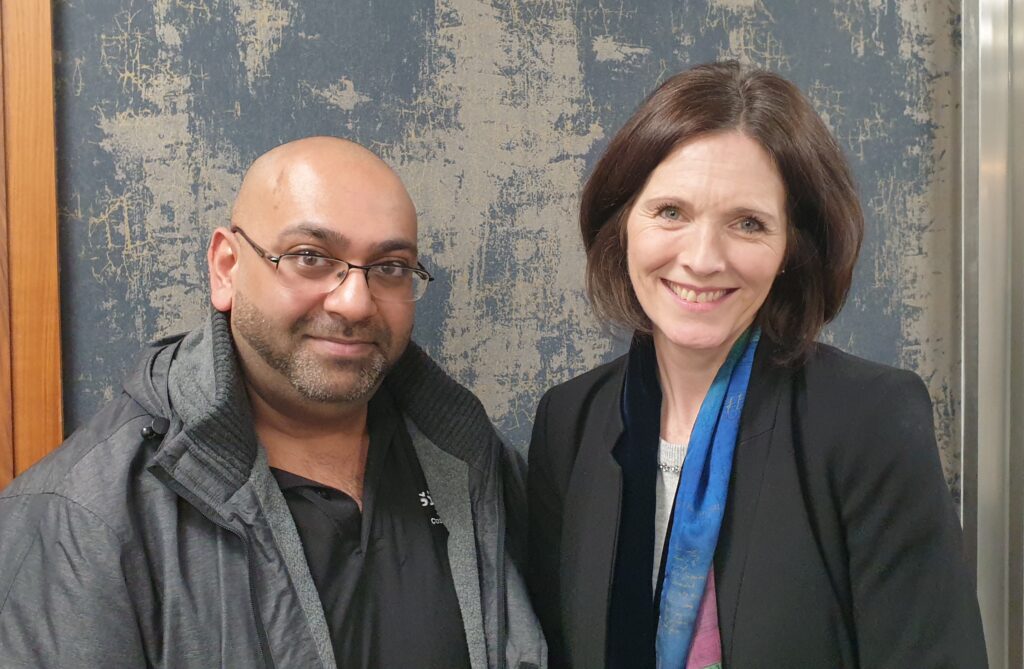
Preparing for a tribunal focuses the mind. Over the past few days, Eleanor has begun to focus less on what she doesn’t know and more on what she does know. Eleanor looked again at the June 2020 emails disclosed to her. She saw that five days after Tom Cooper’s email, Richard Watson, the UKGI lawyer sent his colleagues an email as part of the same chain. Attached to it was a “draft report from POL’s lawyers (Herbert Smith Freehills)” with the name “Project Brisbane“, which had the date 18 June 2020. Was this the “history of what was shared with the Board” about the Post Office scandal?
Eleanor searched for “Project Brisbane” and “Brisbane” on the official Post Office Inquiry website. Nothing. Then she searched it on Matthew Somerville’s dracos site, an unofficial public interest archive which spends its days crawling and logging all the documents uploaded to the official Post Office Inquiry website, making them fully searchable as it goes.
Bingo
Project Brisbane appears in five documents uploaded to the Post Office Inquiry website:
- UKGI00013178 – a 7 September 2020 “Official Sensitive” briefing from the Post Office to the Postal Affairs ministers in both the Lords and the Commons, the Post Office CEO and Chair and several ranks of high level civil servants and lawyers.
In an underlined title, the briefing describes Project Brisbane as a report into “POL’s Historical Management of the GLO” [the Group Litigation, ie Bates v Post Office]. Under the title everything is redacted.
- UKGI00048174 – UKGI Preliminary Internal Review into the Post Office and the Horizon IT System
In which Project Brisbane is referenced nine times for chronological points in the scandal, including in one completely redacted paragraph. The documents also seems to reference the existence of two more Project Brisbane (draft?) reports – one dated 31 March 2020 and another dated 23 July 2020.
- POL00128970 – Report to SRA of potential misconduct by ex-POL/RMG [Post Office Ltd/Royal Mail Group] lawyers
A report by the Post Office to the SRA [Solicitors Regulation Authority] which states “having regard to… a review of material in the PCDE [Post Conviction Disclosure Exercise undertaken by criminal law firm Peters & Peters] and Project Brisbane” it was decided that three senior Post Office/RMG lawyers – Jarnail Singh, Rob Wilson, and Juliet McFarlane should be referred to the SRA for “conduct… capable of amounting to a serious breach of the SRA’s regulatory arrangements”.
- POL00448793 – Post Office board meeting minutes of 8 April 2020
In which it is noted the Board “REQUESTED a closed session with the Non-Executive Directors and HSF on Project Brisbane to understand the different governance groups and the membership of those groups.”
The fifth and final document was a mention in passing to Project Brisbane in a transcript of evidence given during Rob Wilson’s testimony on 12 Dec 2023. The reference was the sentence quoted in the report to the SRA above which was read out to Wilson by Jason Beer. Wilson was not questioned about Brisbane nor even asked what it was.
So what is in Project Brisbane?
Well – it clearly contains a chronology of who knew what and when at the Post Office throughout the key moments of the scandal from at least 2013 (when the cover-up began in earnest) to the completion of the Bates GLO in 2019. Given what Eleanor has been able to parse from the heavily redacted documents, this information flow goes up to boardroom level at least, and may implicate the civil servants and members of the government above them.
Project Brisbane might equally be a tedious non-event, but the desperation to keep this document out of the public domain suggests otherwise. Hiding it also serves two purposes. Firstly, it potentially protects the people named in it from Operation Olympos, the ongoing police investigation into criminality at the Post Office during the scandal.
Secondly, it frustrates the legal action of Lee Castleton, the Subpostmaster who is currently suing the Post Office for its actions against him during the GLO. Lee is seeking to have the GLO settlement agreement set aside, on the basis the Post Office went into it knowing Lee had a separate case against them based on their treatment of him when they took him to court in 2006/7.
Whether or not Eleanor is successful in her mission to prise Project Brisbane out of the Post Office, the document should be put into the public domain. It needs to be be seen by the public, potentially discussed in Parliament and hopefully examined by Operation Olympos. I have asked the Post Office to send it to me (and to let me know if it was disclosed to the Post Office Inquiry).
Btw, I think Eleanor Shaikh deserves some kind of medal for the thousands of hours of unpaid work she has done bringing Project Brisbane and so much other important information to light.
The journalism on this blog is crowdfunded. If you would like to join the “secret email” newsletter, please consider making a one-off donation. The money is used to keep the contents of this website free. You will receive occasional, irregular but informative email updates about the Post Office Horizon IT scandal.



Leave a Reply