
Eleanor Shaikh has lost her court bid to have a single line in a government email unredacted. The line related to a top secret Post Office report called Project Brisbane. The Post Office has maintained that Brisbane and everything related to it is “legally privileged”, which means it is exempt from Freedom of Information (FOI) requests. The ruling means we may never find out what it contains.
The case came about when Shaikh asked the Post Office to unredact a line in an email by Tom Cooper, a UKGI employee and Post Office director. The email was sent to other UKGI colleagues. The Post Office refused, so Shaikh took it to the Information Commissioner (IC) who saw the unredacted line and ordered that it be made public. The Post Office refused again and the matter went to a first tier information tribunal, which Shaikh has now lost.
Coming down squarely on the side of the Post Office, Judge Catherine Harris considered the problems that disclosing the line in the email might cause. She decided that the “key harm was that if the withheld information was disclosed, this would represent a significant erosion of the operation of Legal Advice Privilege (LAP) and Legal Professional Privilege (LPP) generally.”
Harris also felt “disclosure of the withheld information would restrict the ability of a publicly owned body such as the Post Office to communicate with its owner [the government] and would harm the relationship between the owner/shareholder and the body itself. In our view, this would not be in the public interest, because it is in the interests of the taxpayer that this relationship functions properly.”
In general terms she “considered that the need for LPP to be preserved weighed very strongly in favour
of maintaining the exemption. It is not overstating to say that… LPP is a fundamental condition for the administration of justice and there would need to be very significant countervailing public interests to outweigh the need for it.”
So much for that
Shaikh has also failed in her attempt to expose the mechanics of the disastrous Horizon Shortfall Scheme. The documents she had applied to receive, again under FOI, were the HSS Case Assessment Guidance (CAG) and its Case Assessment Principles (CAP).
This is a live issue as it has long been felt by claimants to the scheme (and their lawyers) that the public-facing information about how the scheme works is at odd with the way it really works. That information is buried in the CAG and CAP, which the Post Office refused to release, again on grounds of legal privilege, this time with the backing of the Information Commissioner.
Shaikh nonetheless appealed the matter to the tribunal as she believes there is an overwhelming public interest in seeing the documents published.
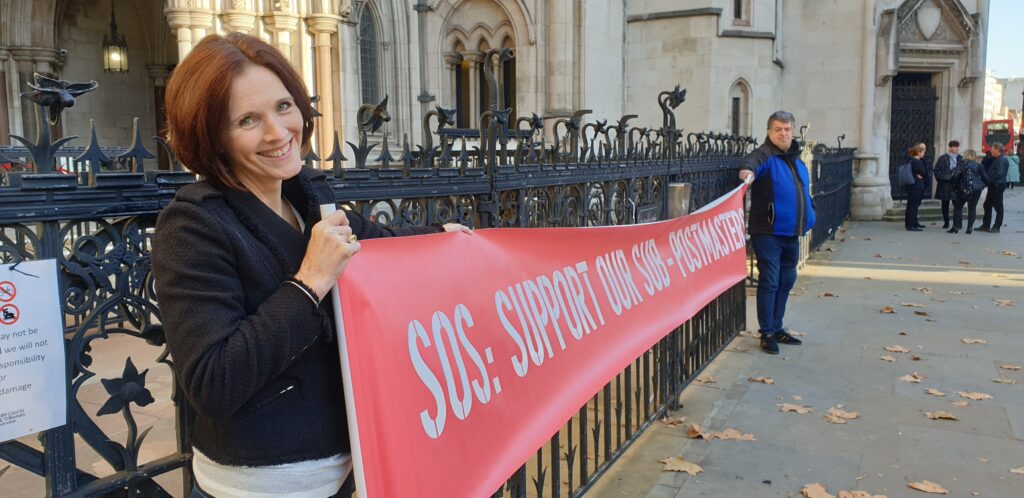
Harris decided on the “balance of probabilities” the CAG and CAP were legally privileged documents “because we accepted that the dominant purpose was to enable Post Office to obtain and apply legal advice in determining claims, including in order to ensure that redress decisions are made on a legally sound and consistent basis.”
Harris considered the “harm” that could be caused if the documents were released. She agreed with the IC that:
- The CAG and CAP are internal working documents not intended for public consumption, therefore their publication could lead to misinterpretation and confusion among compensation applicants and their legal representatives.
- Disclosure of internal working materials could make the Panel’s future role difficult and affect its ability to function effectively.
- Publishing the withheld information could necessitate additional explanations and processes, increasing time and costs and delaying compensation offers to HSS applicants.
Harris wrote: “We gave some weight to the fact that external agencies were questioning the way in which HSS was operating, but considered that disclosing the documents would not address this to any significant degree. Similarly, we gave limited weight to the evidence in the YouGov survey indicating dissatisfaction with offers.”
In what she called a “finely balanced” decision, Harris concluded that the “public interest weighed in favour of preserving rather than eroding LAP… the balance weighed in favour of maintaining the exemption” and so Eleanor’s appeal was dismissed.
Travesty and Disgrace
Shaikh can lodge an appeal over both outcomes, but has not, as yet decided one way or another. She told me the “fierceness” of the Post Office’s defence in both tribunals “speaks volumes; this is an institution still throwing infinite resources at legal procedures to prevent unpalatable truths coming to light.”
Shaikh noted that in the Brisbane tribunal “the ICO barrister, who had himself seen the redacted material, referred to it as ‘a matter of significant public interest’. There’s no doubt that, under cover of its old friend Legal Privilege, the Post Office is sitting on crucial evidence pertaining to who knew what within the Post Office regarding Horizon issues, with no intention of disclosure.”
With regard to the HSS application, Shaikh called the outcome “hugely disappointing for all those who’ve been, and are still, fighting for redress within a scheme inherently skewed in favour of the Post Office.”
She said “that these secret guidelines, interwoven with legally privileged advice, were drawn up in such a way as to make them permanently beyond the reach of the scheme’s 14,000+ eligible applicants is both a travesty and a disgrace. Given that settlements via the HSS and HSSA have now topped the £1bn mark, it is a sorry state of affairs that the underlying principles which are inconsistent with the public-facing guidelines and which are manifestly restricting offers, are not available for scrutiny by applicants, their legal teams and by the public at large.”
Shaikh feels the Post Office is an “institution incapable of understanding that its heinous actions over decades have permanently strengthened the weight of public interest in favour of disclosure. And it’s deeply disappointing that in this particular case, the tribunal found the weight of public interest was insufficient to enforce the release of legally privileged material.”
The Post Office told me they “welcome the consideration and detailed analysis that the Tribunal have published regarding their decision, confirming the importance of LPP within the UK legal system. We are committed to ensuring that every victim of the scandal receives full and fair redress. In addition, anyone with an outstanding claim in any of the schemes run by Post Office have a dedicated person contactable by phone, supporting them to resolve their claim.”
The journalism on this blog is reliant on your financial support. If you would like to join the “secret email” newsletter, please consider making a one-off donation. The money is used to keep the contents of this website free. You will receive occasional, irregular but informative email updates about the Post Office Horizon IT scandal and a warm glow at supporting free-at-the-point-of-consumption public interest journalism.



Leave a Reply